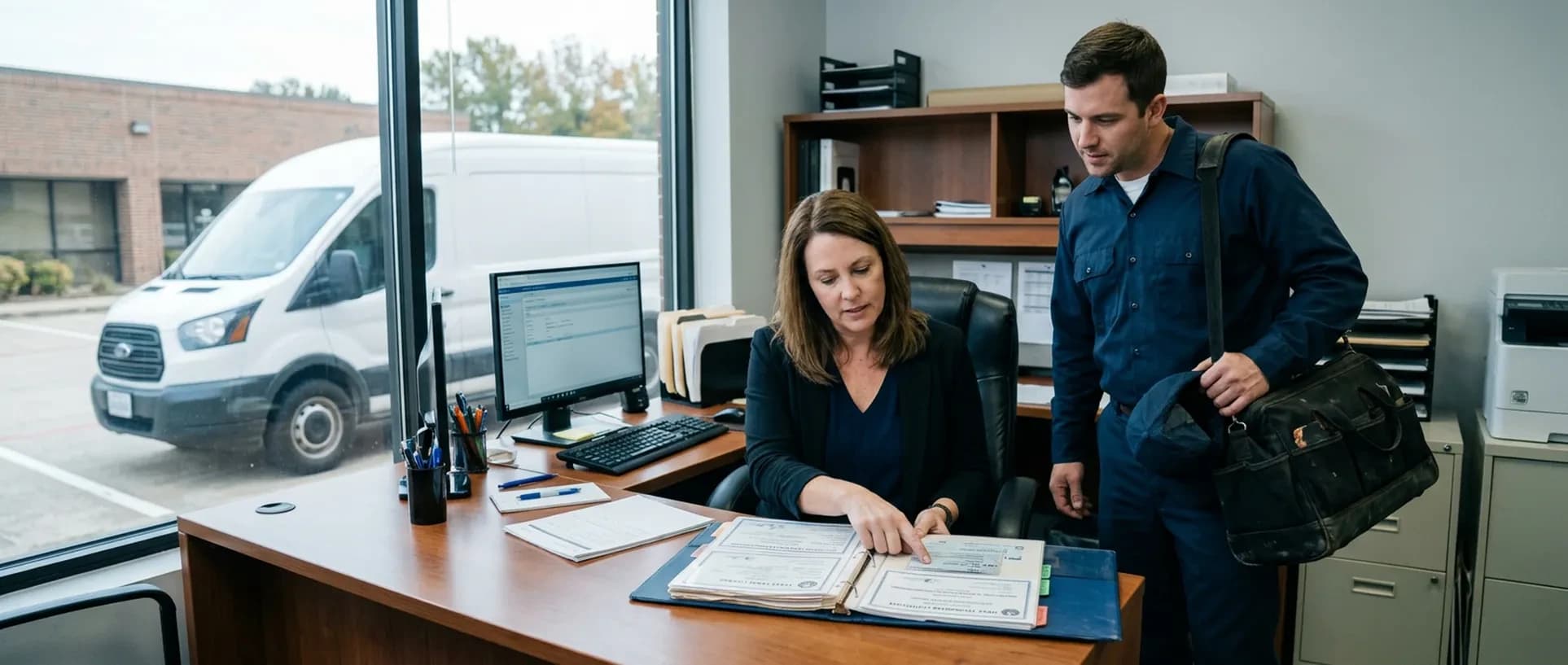
How Operations Support Helps Amazon DSPs Stay Audit-Ready
Audit readiness does not begin when someone requests your records. It comes from capturing, organizing, and reviewing operational documentation as part of the work your team performs every day.
Amazon Delivery Service Partners generate a significant amount of operational information. Driver performance data, coaching records, vehicle inspections, maintenance updates, schedules, attendance information, safety events, and scorecard materials may all be created during a normal week.
The challenge is rarely a complete lack of data. The challenge is that the information often lives in different systems, spreadsheets, inboxes, chat threads, and paper files. When records are fragmented, managers lose visibility into what is complete, what requires attention, and what can be retrieved when a client or reviewer requests it.
This is why Amazon DSP audit readiness should be treated as an operating discipline rather than a last-minute documentation project. A structured approach helps keep records current, surfaces operational exceptions earlier, and makes relevant information easier to review and retrieve.
This guide explains what DSPs should organize, how daily documentation practices support audit readiness, and how LMDmax's Operations Support can reduce the administrative work surrounding performance, fleet, safety, scheduling, and operational records.
What Audit Readiness Means for a DSP
Being audit-ready does not mean predicting every possible request or guaranteeing a particular audit result. It means maintaining relevant operational records in a consistent, organized, and retrievable form.
An audit-ready DSP should be able to answer practical questions such as:
- Which drivers were active during a particular period?
- Which vehicles completed their required inspection workflow?
- What vehicle issues were identified, and what status was recorded?
- Which safety or performance exceptions required review?
- What coaching or follow-up was documented?
- What schedule, attendance, and route information supports the operational record?
- Can the relevant information be retrieved without searching through several disconnected systems?
The objective is not documentation for its own sake. Organized records give managers a clearer view of the operation and provide evidence of the processes the DSP has followed.
Why DSP Documentation Becomes Fragmented
DSP operations move quickly. Dispatch decisions may be made in one system, driver communication may happen in another, fleet inspections may be stored separately, and performance information may arrive through multiple reports.
This fragmentation creates several recurring problems.
Records Are Difficult to Retrieve
A document may exist, but that does not make it operationally useful. If a manager needs an hour to locate an inspection record or determine which coaching conversation followed a safety event, the information is not truly accessible.
Exceptions Are Discovered Too Late
When information is reviewed only at the end of the week or before an audit, missing details and unresolved operational issues have already aged. Drivers and managers may no longer remember the context needed to resolve them accurately.
Managers Become Manual Integrators
Operations managers often spend hours copying information between spreadsheets, reports, messages, and client portals. This work consumes time that could otherwise be spent on driver coaching, dispatch preparation, fleet readiness, and operational improvement.
Different Managers Follow Different Processes
When there is no shared workflow, documentation quality depends on who is working that day. One manager may record a coaching conversation thoroughly, while another may handle the same situation through an undocumented verbal discussion. Inconsistent execution produces inconsistent records.
The Operational Records DSPs Should Keep Organized
The exact documentation a DSP needs depends on its contracts, operating location, internal policies, and applicable requirements. However, several operational areas regularly contribute to audit readiness.
Driver Performance and Coaching Records
Performance data becomes more useful when it is connected to documented follow-up. A structured record may include the performance issue reviewed, the context provided by the driver, the expectation communicated, and the next action assigned by the DSP's management team.
These records help managers distinguish between isolated events, recurring driver patterns, and broader operational issues affecting multiple drivers.
Safety Information
Safety documentation may include telematics events, coaching activity, incident information, and evidence associated with a reviewed event. The goal is to keep relevant safety information organized so the DSP can understand what happened and determine what action, if any, should be taken.
Real-time monitoring is especially valuable here. When an operational or safety exception is surfaced while the information is still current, the DSP can review it sooner and document its decision more accurately.
Fleet Inspection and Readiness Records
Vehicle inspection status, reported damage, maintenance needs, assignments, and supporting images all contribute to the fleet record. Managers should be able to see which vehicles have completed their inspection workflow and which vehicles have an unresolved issue before load-out.
Organized fleet records also make it easier to review the history of a particular vehicle without reconstructing that history from paper forms, individual photographs, and separate maintenance conversations.
Scheduling, Attendance, and Coverage Information
Scheduling and attendance records provide important operational context. If a route was reassigned, a driver called out, or a coverage gap changed the day's plan, that information may explain downstream performance or overtime results.
Keeping scheduling information connected to the broader operational record helps managers understand why an outcome occurred rather than viewing the outcome in isolation.
Scorecard Preparation and Performance Information
Scorecard data can help the DSP identify trends and establish coaching priorities. Preparing this information in a consistent format supports management review and makes it easier to connect scorecard results with driver, route, fleet, or scheduling conditions.
LMDmax supports scorecard preparation and performance-data organization, while the DSP decides how to interpret the information and what actions to take.
Operational Exception Records
Not every exception is a compliance failure. An exception is simply something that falls outside the expected workflow and requires attention. Examples may include an uncovered shift, an incomplete vehicle inspection, a safety flag, an unresolved maintenance need, or a timecard item requiring confirmation.
Surfacing these exceptions in real time helps the DSP review them before they become larger operational problems.
LMDmax
How LMDmax helps keep records audit-ready
Audit readiness depends on records that are organized and easy to find. Operations Support is administrative support carried out at your direction, inside your systems. It brings scorecard information, fleet records, and inspection and coaching evidence into one organized view. Your team decides what its requirements are and how the records are used.
A Practical Audit-Readiness Workflow
DSPs can improve documentation readiness by building a repeatable workflow around five activities.
1. Capture Information During the Work
Documentation should be created as close as possible to the underlying event. Vehicle condition should be recorded during the inspection workflow. Coaching should be documented when it occurs. Attendance and schedule changes should be updated when they are confirmed.
This reduces reliance on memory and improves the quality of the record.
2. Consolidate Related Information
Whenever possible, connect related records. A fleet issue should be connected to the affected vehicle and inspection. A coaching record should identify the driver and the performance information that prompted the discussion. A schedule adjustment should remain visible alongside the resulting assignment.
3. Review Exceptions Promptly
Managers should focus first on exceptions requiring attention. Real-time safety events, coverage gaps, incomplete workflows, and unresolved vehicle issues should be reviewed while the underlying context is still current.
4. Assign Decision Ownership
Every exception that requires action should have a responsible person on the DSP's team. Technology and administrative support can surface and organize the issue, but a client-side owner must decide what happens next.
5. Test Record Retrieval
Periodically select a driver, vehicle, or operating day and attempt to retrieve the related documentation. This simple test reveals whether the process is producing records that are genuinely usable.
If basic information requires extensive searching, the documentation system needs further organization.
A Simple Internal Audit-Readiness Check
DSP owners can use the following questions during a periodic internal review:
- Can we retrieve a selected vehicle's recent inspection and readiness history?
- Can we identify unresolved vehicle or safety exceptions?
- Can we connect driver performance issues with documented coaching?
- Can we explain major scheduling or coverage changes for a selected day?
- Are operational records stored consistently?
- Is relevant evidence attached to the correct driver, vehicle, or event?
- Does every open exception requiring action have a DSP decision owner?
- Are we following the retention and documentation requirements established for our business?
The purpose of this review is to identify process gaps before an external request exposes them.
What Operations Support Does Not Replace
Operational support can make documentation more consistent, visible, and retrievable. It does not replace the DSP's responsibility to understand and satisfy its contractual, legal, regulatory, employment, safety, or record-retention obligations.
Requirements may vary by jurisdiction, contract, vehicle type, workforce structure, and operating model. DSP owners should establish applicable requirements with qualified legal, tax, safety, insurance, or compliance professionals when appropriate.
LMDmax does not determine whether a DSP is legally compliant, certify that records satisfy every possible audit request, or make operational decisions for the DSP.
From Reactive Preparation to Daily Readiness
Audit readiness is strongest when it is a natural result of daily operations. When inspections are documented as they occur, performance information is prepared consistently, exceptions are surfaced promptly, and records remain organized, the DSP does not need to rebuild its operational history every time information is requested.
The larger benefit is operational clarity. The same records that support audit readiness also help managers understand fleet condition, driver performance, safety activity, schedule execution, and open operational issues.
LMDmax's Operations Support provides the administrative structure and operational visibility needed to support that discipline. LMDmax organizes and prepares information, while the DSP retains control of every material decision.
Frequently Asked Questions
What does audit-ready documentation mean for an Amazon DSP?
Audit-ready documentation is organized, current, supported by relevant evidence, and reasonably easy to retrieve. It does not guarantee a particular audit outcome. It means the DSP can produce a clear operational record without having to reconstruct it from fragmented sources.
What operational documentation can LMDmax Operations Support help organize?
Operations Support covers administrative work involving performance data, scorecard preparation, fleet records, safety workflows, scheduling, communication, and structured operational documentation. The precise scope should be established between LMDmax and the client.
Does LMDmax determine whether a DSP is compliant?
No. LMDmax provides operational software and administrative support. The DSP remains responsible for identifying its requirements, reviewing its records, making decisions, and determining whether professional legal or compliance advice is needed.
Does Operations Support make decisions when an exception is found?
No. The platform and support team can surface operational exceptions and organize the relevant information. The DSP's managers decide how to respond.
How does real-time monitoring support documentation?
Real-time monitoring helps surface safety events, fleet-status issues, and operational exceptions while the information is current. This allows the DSP to review the context sooner and document its response more accurately.
Does the service guarantee that a DSP will pass an audit?
No. Organized and retrievable records can support audit readiness, but no operational support provider can guarantee the result of a client, regulatory, contractual, or legal review.
What is the first step toward better audit readiness?
Start with a retrieval test. Select one driver and one vehicle, then attempt to locate the relevant performance, coaching, inspection, and operational records. The time and effort required will show where documentation is fragmented and which workflows should be improved first.
LMDmax provides administrative and operational support at the client's direction. The client retains responsibility for all employment, safety, compliance, fleet, and business decisions. This article is provided for general informational purposes and is not legal or regulatory advice.
Ready to improve your operational visibility? Book a demo with LMDmax to see how Operations Support helps logistics and delivery businesses keep performance, fleet, safety, scheduling, and operational records organized.